 Türkçe
 English
IVF Embryo Transfer in Turkey
What Is Embryo Transfer?
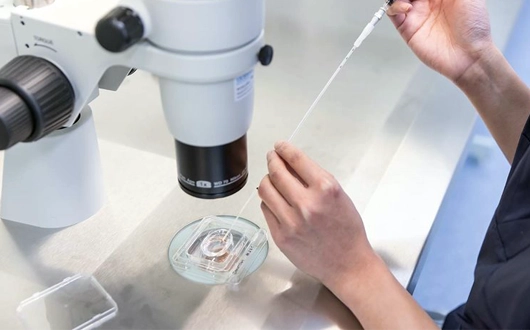
Embryo transfer is the final stage of in vitro fertilization (IVF) treatment. In this process, embryos that have been fertilized in the laboratory are placed into the woman’s uterus. The goal is for the embryo to implant in the uterine lining and initiate a healthy pregnancy.
How Is Embryo Transfer Performed?
Embryo transfer is one of the most critical steps of IVF treatment. Eggs that have been carefully stimulated and retrieved are fertilized with sperm, high-quality embryos are monitored, and the time comes for them to meet the uterus. The selected high-quality embryo or embryos are loaded into a thin catheter. After the patient is positioned with a comfortably full bladder, the catheter is gently advanced through the cervix and the embryos are placed approximately 1–2 cm below the top of the uterus. The procedure does not require anesthesia.
Steps of Embryo Transfer
Embryo transfer in IVF is carried out through the following steps:
Egg Retrieval: This is a procedure performed to obtain eggs for IVF or other assisted reproductive techniques. It is also known as OPU (Oocyte Pick-Up). Under sedation anesthesia, eggs are collected using a needle guided by transvaginal ultrasound.
Fasting from food and fluids for 7–8 hours is required before egg retrieval. After the procedure, the patient is discharged following 1–2 hours of rest.
Embryo Development: Fertilized eggs are allowed to develop in the laboratory for several days.
Embryo Selection: The embryos with the best developmental quality are selected.
Embryo Transfer: The selected embryos are placed into the uterus using a thin catheter.
Embryo transfer is generally a painless procedure. After the transfer, implantation of the embryo and the onset of pregnancy are awaited. In some cases, more than one embryo may be transferred to increase success rates; however, this also increases the risk of multiple pregnancy.
Embryo Freezing (Cryopreservation): After transferring the number of embryos permitted according to age regulations, the remaining embryos obtained during the treatment cycle are frozen in groups and stored in liquid nitrogen tanks. If pregnancy does not occur, these embryos can be thawed and transferred in subsequent months. In some cases, when conditions are not suitable for a fresh transfer, all embryos obtained during the cycle may be frozen and stored for transfer in later months. When embryos are thawed, there is a 99% survival rate without deterioration.
Embryo Freezing Pool (Embryo Banking) Method: In patients with low ovarian reserve, consecutive egg retrieval procedures are performed before the reserve decreases further. The embryos obtained are frozen to create an embryo pool. At a later, suitable time, after preparing the uterus, the embryos are thawed and transferred.
Regulations on Egg and Sperm Freezing: In men, sperm cells can be frozen and stored when sperm is obtained through surgical methods, before treatments such as chemotherapy or radiotherapy that may damage reproductive cells, before surgeries that may impair reproductive function (such as testicular surgery),or when very few sperm cells are available.
In women, eggs may be frozen before treatments such as chemotherapy or radiotherapy that can damage reproductive cells, before surgeries that may impair reproductive function (such as ovarian removal, large ovarian cyst surgeries, or cancer surgeries),and in women with low ovarian reserve who have not had children or who have a family history of early menopause. In these cases, egg freezing can be performed with a medical board report signed by three physicians.
IVF Embryo Transfer in Ankara, Turkey
In IVF treatment, embryo transfer is the procedure in which fertilized eggs (embryos) created in the laboratory are placed into the mother’s uterus. This step takes place after the eggs have been retrieved, fertilized, and developed into embryos.
What Is Fresh Embryo Transfer?
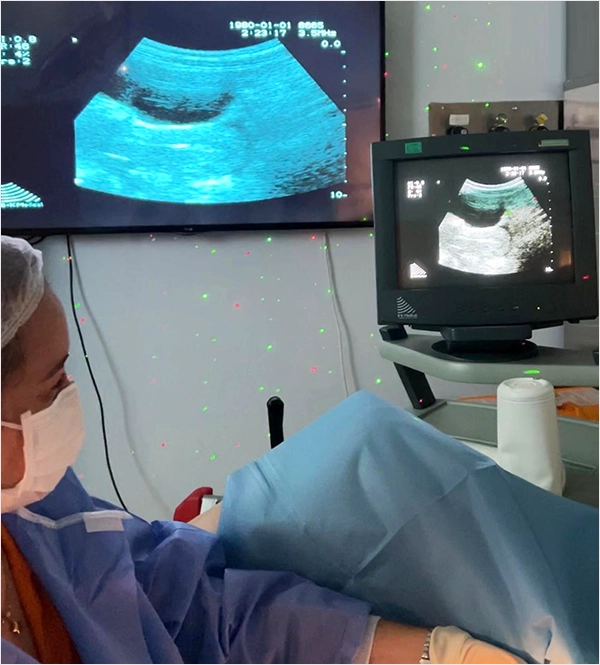
Fresh embryo transfer refers to the transfer of embryos into the uterus within the same treatment cycle in which the eggs are retrieved. A fresh transfer is performed if hormone levels are appropriate, the uterine lining (endometrium) has reached sufficient thickness with a regular structure, and there is no risk of ovarian hyperstimulation syndrome (OHSS).
What Is Frozen Embryo Transfer (FET)?
After transferring the number of embryos permitted according to age during a treatment cycle, the remaining embryos are frozen in groups and stored in liquid nitrogen tanks. If pregnancy does not occur, these embryos can be thawed and transferred in subsequent months. In some cases, when conditions are not suitable for a fresh transfer, all embryos obtained during the treatment cycle may be frozen and stored for transfer in later cycles. With current freezing techniques, embryos maintain their integrity at a rate of approximately 99% after thawing.
How Is the Uterus Prepared for Frozen Embryo Transfer?
On the 2nd or 3rd day of menstruation, an ultrasound examination is performed. If blood hormone levels are appropriate and there are no hormone-secreting cystic structures, uterine preparation is initiated with estrogen, followed by a combination of estrogen and progesterone. In some cases, the uterus may also be prepared through a natural cycle. In this approach, the transfer day is calculated based on the growth and ovulation of the patient’s own follicle. After thawing the frozen embryos, the embryo transfer is performed using the same technique as in fresh embryo transfer. The success rates of frozen embryo transfer are comparable to those of fresh embryo transfer.
What Should Be Considered After Embryo Transfer?
Prolonged bed rest is not necessary after embryo transfer. Resting for 10–15 minutes after the procedure is sufficient. Afterwards, it is recommended to drink at least 3 liters of water daily and to avoid constipation. Heavy physical exercise should be avoided. Sexual intercourse is not recommended until the pregnancy test is performed. Going through the process calmly, without stress, and maintaining a positive mindset can make a significant contribution.
When Should a Pregnancy Test Be Performed After Embryo Transfer?
A pregnancy test should be performed 12 days after a day-3 embryo transfer and 10 days after a day-5 blastocyst transfer.
At Which IVF Attempt Does Pregnancy Usually Occur?
Although there is a common belief that pregnancy is usually not achieved in the first IVF attempt, this is a misconception. When all stages of treatment are carefully and meticulously managed, the chance of achieving pregnancy in the first attempt can be quite high. However, as the number of unsuccessful attempts increases, the likelihood of pregnancy tends to decrease. In patients with repeated IVF failures, additional investigations are required.
What Should Be Done in Recurrent IVF Failures?
In cases of recurrent IVF failure, the chromosomal structure of both partners should be evaluated, and they should be investigated for coagulation disorders that may predispose to thrombosis. To assess whether there is any intrauterine pathology, hysteroscopy may be performed.
During this procedure, an endometrial biopsy can also be taken to evaluate the presence of chronic intrauterine infection. The biopsy can further be used to assess endometrial–embryo synchronization, determining whether the endometrium is advanced or delayed relative to the embryo on the day of transfer. Immunological tests on the biopsy sample can also reveal whether there is an excessive increase in immune system cells within the uterus.
If a chromosomal abnormality is detected in either partner, preimplantation genetic testing should be performed on the embryos in subsequent treatments. When a coagulation disorder is identified, anticoagulant injections and oral medications are administered after embryo transfer.
Pathologies detected during hysteroscopy can often be diagnosed and treated simultaneously. If endometrial asynchronization is identified on biopsy, the embryo transfer day can be adjusted earlier or later accordingly. Additionally, if increased immune cell activity is detected, serum therapies that suppress these cells may be administered to enhance implantation.
Lipid Serum Therapy (Natural Killer Cell Suppressive Serum Therapy)
In patients with recurrent IVF failure, if increased natural killer (NK) cell activity is detected in the endometrial biopsy, intralipid serum therapy—designed to suppress NK cell activity—may increase the likelihood of embryo implantation.
Hysteroscopy (Endometrial Scratching)
Hysteroscopy is a procedure in which the uterine cavity is directly visualized using a camera inserted through the cervix. It serves both diagnostic and therapeutic purposes. During hysteroscopy, lesions such as polyps or fibroids, intrauterine adhesions, and congenital uterine anomalies can be treated at the same time.
In patients with recurrent IVF failure, a mild injury (endometrial scratching) may be intentionally created inside the uterus using hysteroscopic scissors. This is done to stimulate the production of factors that enhance embryo implantation.


 About Me
 Contact