 Türkçe
 English
Hysteroscopy in Ankara, Turkey
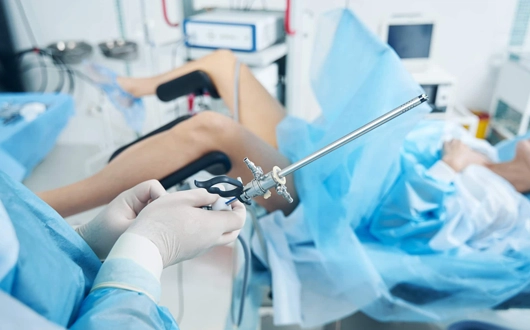
What is Hysteroscopy?
Hysteroscopy is a procedure in which the inside of the uterus is examined using a specialized camera system, and when a pathology is detected, it can be treated with instruments passed through the same system. It is a minimally invasive surgical method and is preferred for evaluating intrauterine pathologies because it usually does not require hospitalization and allows both diagnosis and treatment in the same session.
When is Hysteroscopy Performed?
Hysteroscopy is frequently performed for:
- Removal of structures occupying the uterine cavity, such as polyps and fibroids detected on transvaginal ultrasound,
- Opening of intrauterine adhesions or septa,
- Investigation of underlying causes in infertility, recurrent pregnancy loss, or heavy and irregular menstrual bleeding,
- Treatment of isthmocele (hernia-like defects at cesarean scar sites),
- Removal of intrauterine devices (IUDs) with broken strings.
How is Hysteroscopy Performed?
Hysteroscopy involves inserting a camera system called a hysteroscope through the cervix into the uterine cavity. The uterus is filled with fluid to allow detailed visualization. After examining the uterine cavity, surgical instruments can be passed through the same system to treat any detected pathologies during the same session.
The ability to perform both diagnosis and treatment simultaneously is a major advantage. Lesions inside the uterus can be directly visualized and removed from their base, or adhesions can be opened, making hysteroscopy more effective and safer compared to blind procedures such as conventional endometrial curettage.
Diagnostic Hysteroscopy
When suspicious lesions such as polyps, fibroids, septa, or adhesions are seen during a routine gynecological exam or transvaginal ultrasound, diagnostic hysteroscopy is considered the gold standard for both diagnosis and potential treatment.
For patients with infertility or recurrent miscarriages, especially those with risk factors such as prior severe infections or repeated uterine procedures, diagnostic hysteroscopy is recommended to evaluate endometrial factors. For patients with heavy or irregular menstrual bleeding, hysteroscopic biopsy is preferred to investigate underlying organic causes such as polyps, fibroids, or endometrial hyperplasia.
Because the camera used in diagnostic hysteroscopy is thin, the procedure can often be performed in an outpatient setting under local anesthesia, allowing patients to resume daily activities immediately afterward.
Operative Hysteroscopy
Operative hysteroscopy requires a thicker camera system and cervical dilation, so it is usually performed under general anesthesia in a hospital setting. It is indicated for removing large polyps or fibroids, cutting intrauterine septa, or treating isthmocele. Patients are typically discharged on the same day after recovery from anesthesia.
Polyp Removal with Hysteroscopy
Polyps are benign growths arising from the endometrial lining of the uterus. Although generally noncancerous, malignancy can rarely develop within them. Using the hysteroscopic camera system, polyps can be visualized and excised completely from their base. The removed tissue is sent for pathological examination to confirm the diagnosis.
Fibroid Removal with Hysteroscopy
Fibroids are benign tumors arising from the smooth muscle cells of the uterine wall. Pedunculated fibroids within the uterine cavity can be removed at their stalks, while larger submucosal fibroids can be excised using scissors or electrocautery. Residual fibroid tissue within the uterine muscle may require a second session. All removed tissue is sent for pathology to confirm the diagnosis.
Removal of Uterine Septa or Intrauterine Adhesions with Hysteroscopy
Hysteroscopy allows the visualization and careful excision of septa or adhesions dividing the uterine cavity without damaging the uterine walls. After these procedures, special gels may be applied to prevent the reformation of adhesions.
What are the Advantages of Hysteroscopy?
Hysteroscopy is a minimally invasive procedure that does not require any incisions. Because it is performed through the vagina rather than the abdomen, patients can quickly return to their daily activities without the need for hospitalization. Both diagnosis and treatment can be performed in the same session. Since the procedure is performed under direct visualization with a camera, the risk of damage to the uterine wall is significantly lower compared to blind curettage procedures.
What are the Risks of Hysteroscopy?
Although rare, complications of hysteroscopy can include uterine perforation, injury to surrounding organs, and post-procedure infection.
Post-Hysteroscopy Care Instructions
- Pain: Mild cramping in the lower abdomen may occur for a few days after the procedure. Pain relievers can be used as needed.
- Vaginal spotting: Light spotting may occur for up to a week.
- Sexual activity: Sexual intercourse is not recommended for 2 weeks following the procedure.
- Infection prevention: Vaginal douches, tampons, and sexual intercourse should be avoided for the first few days unless otherwise directed by your doctor. Antibiotics may be prescribed depending on the type of procedure.
- Rest: Avoid heavy physical activity for the first 24 hours.
- Bleeding monitoring: Light spotting is normal, but contact your doctor if heavy bleeding or clotting occurs.
- Pain management: Over-the-counter pain relievers can be used for mild cramps. Severe pain should be evaluated by a physician.
- Fever monitoring: A fever above 38°C (100.4°F) may indicate infection and should be reported immediately.
- Hydration: Adequate fluid intake supports recovery.
- Medication adherence: Take all prescribed antibiotics or hormonal medications as directed.
- Follow-up: A follow-up appointment is important to assess recovery and ensure proper healing.
Hysteroscopy Costs in Ankara 2026
Hysteroscopy fees range from 20,000 to 45,000 TRY, depending on the reason for the procedure. A precise cost can be provided after an initial consultation.


 About Me
 Contact