 Türkçe
 English
Hysteroscopic Polyp Surgery Turkey
What is a Polyp?
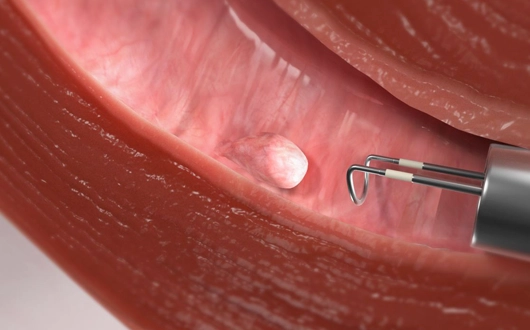
Polyps are benign, fleshy growths that develop from the lining of the uterus (endometrium). Although benign, they are important because they can cause irregular menstrual bleeding and, in rare cases, may serve as a site where cancer can develop.
What Causes Polyps?
Polyp formation occurs when the endometrial lining responds abnormally to hormonal stimulation. Increased estrogen activity, in particular, can trigger uncontrolled growth of endometrial cells, leading to polyp development. Factors such as age, hormonal imbalances, metabolic issues, and disruptions in the normal regenerative process of the uterine lining also play significant roles in polyp formation.
Factors Contributing to Polyp Formation:
- Increased estrogen levels or an imbalance between estrogen and progesterone
- Perimenopause and menopause
- Obesity and insulin resistance
- Polycystic Ovary Syndrome (PCOS)
- Use of tamoxifen
- Chronic endometrial inflammation
- Genetic predisposition
What Are the Symptoms of Polyps?
Since polyps originate from the uterine lining (endometrium),they can cause increased menstrual bleeding, irregular periods, and spotting. Additionally, by occupying space in the uterine cavity and disrupting the normal uterine environment, polyps can interfere with embryo implantation and may contribute to infertility.
Which Polyps Can Be Removed with Hysteroscopy?
The majority of polyps located within the uterine cavity and originating from the endometrium can be safely removed via hysteroscopy. Polyps that are pedunculated (on a stalk) or have a limited base, extending into the uterine cavity and identified by ultrasound or saline infusion sonography (SIS),are ideal candidates for hysteroscopic removal. Small to medium-sized polyps, whether single or multiple, can usually be removed in a single session. Lesions that extend outside the uterus or are deeply embedded in the myometrium may require alternative surgical approaches.
Polyps That Can Be Removed via Hysteroscopy:
- Endometrial polyps within the uterine cavity
- Pedunculated (stalked) polyps
- Broad-based but superficially located polyps
- Single or multiple polyps
- Small to medium-sized polyps
- Intracavitary polyps detected by ultrasound or SIS
Hysteroscopic Polyp Surgery Turkey
Hysteroscopic polyp surgery is a minimally invasive procedure that allows the removal of polyps developing in the uterine lining (endometrium) through the vagina without any incisions, under direct camera visualization.
Since the uterine cavity is directly visualized during the procedure, the location, number, and size of the polyps can be accurately assessed, and targeted removal can be performed without damaging healthy tissue. One of the key advantages of this method is that diagnosis and treatment can be carried out in the same session.
The procedure is usually short, and most patients can be discharged on the same day. Hysteroscopic polyp removal plays both a diagnostic and therapeutic role in cases of menstrual irregularities, abnormal uterine bleeding, recurrent miscarriages, and infertility. By preserving the uterine anatomy and enabling a fast recovery, it is a modern approach that is particularly safe for patients planning pregnancy.
How Is Hysteroscopic Polyp Removal Performed?
A hysteroscope is inserted through the cervix into the uterine cavity to evaluate the interior. Polyps can be removed either by cutting with scissors or by cauterization using a resectoscope. The removed tissue is sent to pathology for definitive diagnosis.
Advantages of Hysteroscopic Polyp Surgery
As a minimally invasive technique, hysteroscopy allows a short hospital stay and rapid return to daily life. Compared to open surgery through the abdomen, the risk of complications such as pain and infection is significantly lower. Accessing polyps originating from the endometrium via abdominal incision is difficult and risky. The hysteroscopic approach enables safe removal of polyps while preserving the uterus.
Hysteroscopic Polyp Surgery Prices 2026
The cost of hysteroscopic polyp surgery varies depending on the number and size of the polyps. Accurate pricing is best provided after an in-person consultation. Please contact our clinic for an evaluation.
Risks of Hysteroscopic Polyp Surgery
Although minimally invasive and safe, hysteroscopic polyp surgery, like any surgical procedure, carries some rare risks. These risks can vary depending on procedure duration, surgical techniques used, the patient’s uterine structure, and any underlying medical conditions. In experienced hands, the complication rate is very low.
Possible Risks Include:
- Infection
- Bleeding
- Uterine wall injury (perforation)
- Intrauterine adhesions
- Fluid imbalance
- Anesthesia-related side effects
- Risk of polyp recurrence
Postoperative Care After Hysteroscopic Polyp Surgery
Patients can usually be discharged the same day and can take showers. Mild cramping may occur and can be managed with painkillers. Antibiotics may be recommended to prevent possible infection. Sexual intercourse should be avoided for three weeks after the procedure.


 About Me
 Contact